For more on the book launch itself – see the info below shared via Bioart Society:
State of the Art – Elements for Critical Thinking and Doing on 21st June 2023 at 17:00 EEST SOLU Space, Panimokatu 1 (3rd floor), Helsinki
Image: Nikita Gavrilenko
Join us for the launch of State of the Art – Elements for Critical Thinking and Doing publication.
The publication wraps up the State of the Art Network (SOTAN) collaboration project. SOTAN has been a Nordic-Baltic transdisciplinary network of artists…
We are thrilled to hold several local, hybrid and online events, where you can tune in and engage with the work of Prof. MacCormack. One of these events is the Tema Genus Higher Seminar taking place on 29th March 2023 at 13:15-15:00 CEST.
Pleas, see details below!
Tema Genus Higher Seminar on
“Occult Ahuman Pedagogy: Death to the Anthropocene by Witchcraft”
Speaker: Prof. Patricia MacCormack (Anglia Ruskin University, UK)
Where: Faros, Tema huset, Campus Valla, Linköping University & on Zoom
When: 29th March 2023, 13:15 – 15:00 CEST
BIO:
Patricia MacCormack is Professor of Continental Philosophy at Anglia Ruskin University Cambridge. She has published…
In care you cannot make it for our symposium on 23rd March in Norrköping, or if you are still thirsty and wish to explore the theme further, you are warmly invited to join us – in a bit altered line-up – for this online event:
Welcome to The Posthumanities Hub & The Eco- and Bioart Lab Webinar
“Ecologies of Death, Ecologies of Mourning vol. II: A Roundtable”
30th March 2023, 13:15 – 15:00 CEST
Where: on Zoom
Our starting point for the international symposium “Ecologies of Death, Ecologies of Mourning: vol. I” (taking place on 23rd March 2023 in Norrköping, SE) is the context of planetary environmental disruption, slow and abrupt environmental violence, and the ways in which ecological, more-than-human dimensions of death have traditionally been underplayed in public debates. During the symposium, we emphasise that what is urgently needed – now more than ever – is the…
VENUE: ARBETETS MUSEUM (THE MUSEUM OF WORK), NORRKÖPING
KEYNOTE SPEAKERS:
Prof. Patricia MacCormack (Anglia Ruskin University, UK)
Prof. Em. Nina Lykke (Linköping University, SE/Aarhus University, DK)
SPEAKERS:
Dr Evelien Geerts (University of Birmingham, UK)
Prof. Christina Fredengren (Uppsala University, SE)
Dr Tara Mehrabi & Dr Wibke Straube (Karlstad University, SE)
Dr Marietta Radomska (Linköping University, SE)
In the Anthropocene, the epoch of climate change and environmental destruction that render certain habitats unliveable and induce socio-economic inequalities and shared ‘more-than-human’ vulnerabilities, death and loss become urgent environmental concerns. As climate scientists indicate, in order to achieve UN Sustainable Development Goals (UN SDGs), a much more radical transformative action is needed from all stakeholders: governments, the private sector, communities and individuals (Höhne et al. 2020).
Simultaneously, planetary environmental disruption, contributing to the mortality of humans and nonhumans, destruction of entire ecosystems, the sixth mass extinction, both abrupt and ‘slow’ violence (Nixon 2011), evoke feelings of anxiety, anger and grief, manifested in popular-scientific and cultural narratives, art, and activism. These feelings are not always openly acknowledged or accepted in society; and the ecological, more-than-human dimensions of death have traditionally been underplayed in public debates. Yet, what we need now – more than ever – is the systematic problematisation of the planetary-scale mechanisms of annihilation of the more-than-human world in their philosophical, socio-cultural, ethico-political and very material dimensions. Only then will it be possible to talk about the issues of responsibility, accountability and care for more-than-human worlds (Radomska & Lykke 2022).
Taking its starting point in critically investigating and challenging conventional normativities, assumptions and expectations surrounding issues of death, dying and mourning in the contemporary world (Radomska, Meharbi & Lykke 2020; https://queerdeathstudies.net/), this interdisciplinary symposium zooms in on more-than-human ecologies of death, dying, grief and mourning across spatial and temporal scales.
The participation in the symposium is free of charge, but we have a limited number of seats. If you wish to take part in the event, please, fill out the form: https://forms.office.com/e/Yb4qXpyVtX
Registration deadline: 15th March 2023 or until the event is fully booked.
NB! In case you register and it turns out you can no longer participate, please let us know by sending an email to: ecobioartlab[at]liu.se . In this way we may be able to let in anyone who may be on the waiting list.
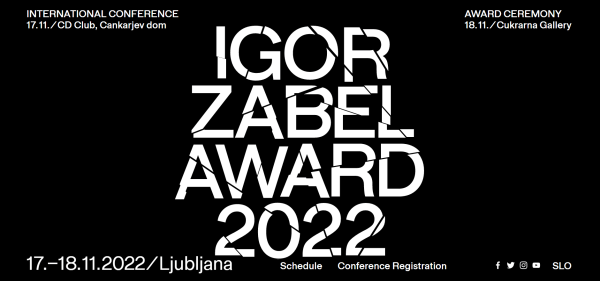
This month I have an honour and pleasure to speak at the International Conference “So Close: Ecologies of Life and Death”, organised by Igor Zabel Association for Culture and Theory. The event takes place on 17th November in Ljubljana (and is livestreamed on YouTube – see details below). Here comes some brief info:
International Conference “So Close: Ecologies of Life and Death”
The theme of the conference is the future of life on our planet from the perspective of life’s end, drawing attention to reconsiderations of loss, decline, mourning, and death. In this way, it seeks to transcend the binary of, on the one hand, dystopian pessimism about the future and, on the other, utopian optimism in the all-powerful human capacity to overcome the end.
Speakers: Maja and Reuben Fowkes, Thom van Dooren, Šejla Kamerić, Marietta Radomska, Boštjan Videmšek, and Mick Wilson
To take part in the conference online, don’t miss the YouTube stream (https://bit.ly/3zCOBhq): click the “notify me” button to get a reminder. You can also follow along via e-flux Live (https://bit.ly/3suq9dQ).
Dear all – it is our pleasure to draw your attention to a new exciting call for papers, which has been announced by the journal Research in Arts & Education.
Abstract submission deadline is soon: 9th November 2022.
Death studies have been a discipline since the 1970s. Currently, death is a topical issue not least due to the war in Europe. Also, Covid-19 made the idea of death a little less remote in peoples’ ordinary life. But death does not concern only humans. The ongoing extinction prompts us to ponder if there are deaths we dismiss as not worth enough of our attention.
Death is an aesthetic, ethical, and ecological issue. Graveyards might be historically meaningful places as in Ulla Taipale’s environmental installation The Other Side in Barcelona 2018, but they take up space…




You must be logged in to post a comment.