New Publication: Dossier ‘What do we talk about when we talk about queer death?’ – Theories and Definitions

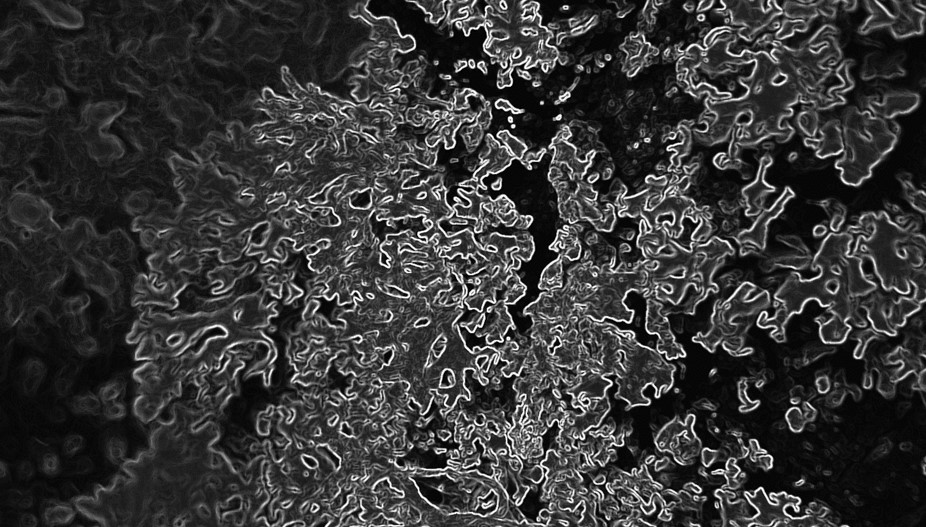
Recently I had a pleasure to contribute to the dossier ‘What do we talk about when we talk about queer death?’, edited by Mattia Petricola and published in the latest issue of the journal ‘Whatever: A transdisciplinary journal of queer theories and studies’.

You may find my short text ‘On queering death studies’ in the longer article ‘Theories and Definitions’, along with the fantastic contributions by Patricia MacCormack, Nina Lykke, Ida Hillerup Hansen, Phillip R. Olson and Nicholas Manganas.

Here comes the abstract:

This is part 1 of 6 of the dossier What Do We Talk about when We Talk about Queer Death?, edited by M. Petricola. The contributions collected in this article sit at the crossroads between thanatology and queer theory and tackle questions such as: how can we define queer death studies as a research field? How can queer death studies problematize and rethink the life-death binary? Which notions and hermeneutic tools could be borrowed from other disciplines in order to better define queer death studies?
The present article includes the following contributions: – MacCormack P., What does queer death studies mean?; – Radomska M., On queering death studies; – Lykke N., Death as vibrancy; – Hillerup Hansen I., What concreteness will do to resolve the uncertain; – Olson P., Queer objectivity as a response to denials of death; – Manganas N., The queer lack of a chthonic instinct.

MacCormack, P., M. Radomska, N. Lykke, I. Hillerup-Hansen, P. R. Olson, N. Manganas. 2021. What do we talk about when we talk about queer death? Theories and definitionsWhatever: Transdisciplinary Journal of Queer Theory and Studies, vol. 4: 573-598. https://doi.org/10.13131/2611-657X.whatever.v4i1.147

New Publication: Fathoming Postnatural Oceans…

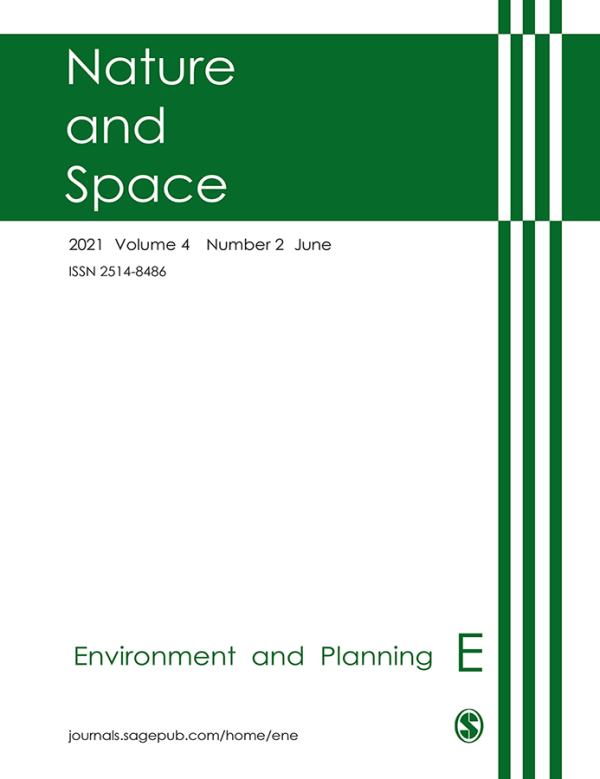
It is my great pleasure to say that our latest article, dealing with postnatural ecologies, non/liveability and low-trophic ecosystems and maricultures of the Baltic and North Sea is finally out in Environment and Planning E: Nature and Space (OPEN ACCESS)!

Radomska, M. and C. Åsberg. 2021Fathoming Postnatural Oceans: Towards a Low-Trophic Theory in the Practices of Feminist PosthumanitiesEnvironment and Planning E: Nature and Spacehttps://doi.org/10.1177/25148486211028542

Check it out!

Abstract:

As the planet’s largest ecosystem, oceans stabilise climate, produce oxygen, store CO2 and host unfathomable biodiversity at a deep time-scale. In recent decades, scientific assessments have indicated that the oceans are seriously degraded to the detriment of most near-future societies. Human-induced impacts range from climate change, ocean acidification, loss of biodiversity, eutrophication and marine pollution to local degradation of marine and coastal environments. Such environmental violence takes form of both ‘spectacular’ events, like oil spills and ‘slow violence’, occurring gradually and out of sight. The purpose of this paper is to show four cases of coastal and marine forms of slow violence and to provide counter-accounts of how to reinvent our consumer imaginary at such locations, as well as to develop what is here referred to as ‘low-trophic theory,’ a situated ethical stance that attends to entanglements of consumption, food, violence, environmental adaptability and more-than-human care from the co-existential perspective of multispecies ethics. We combine field-philosophical case studies with insights from marine science, environmental art and cultural practices in the Baltic and North Sea region and feminist posthumanities. The paper shows that the oceanic imaginary is not a unified place, but rather, a set of forces, which requires renewed ethical approaches, conceptual inventiveness and practical creativity. Based on the case studies and examples presented, the authors conclude that the consideration of more-than-human ethical perspectives, provided by environmental arts and humanities is crucial for both research on nature and space, and for the flourishing of local multispecies communities. This paper thus inaugurates thinking and practice along the proposed here ethical stance of low-trophic theory, developed it along the methodological lines of feminist environmental posthumanities.

Environmental Racism is Garbage. Virtual Research-Creation and Art Symposium. NOW AVAILABLE ONLINE

Photo by David Kilabuk (source: https://environmentalracismisgarbage.art/)

On 27th-29th May 2021 Environmental Racism is Garbage: Virtual Research-Creation & Art Symposium took place online.

This wonderful and important event was supported by a Seed Box grant from Mistra-Formas Environmental Humanities Collaboratory, the Social Science and Humanities Research Council of Canada, Waste Flow (www.wasteflow.ca) and Queen’s University.

Here comes the (shortened) description from the symposium’s website:

The aim of this interactive virtual research-creation and art symposium is to bear modest witness to waste as a symptom of environmental racism. […] Environmental Racism is Garbage seeks knowledge production and acts of resistance at the intersection of art, politics, and the relationship between racialized injustice and ecological crisis. We’ve invited contributions and collaborations from visual and performance-based artists, curators, theorists and activists, to create submissions that engage with the interconnections between environmental health, socio-economic conditions, racialized discrimination, social justice – with transdisciplinary work driven by creative inquiry and lived experience forefronted.

I had a pleasure and honour to speak in the panel focused on Ecological Grief which took place on 26th May. In case you missed it, feel free to check out the recording of the panel (along with many other fascinating talks and panels) available until May 2022 on the symposium’s YouTube channel and website.

‘Arts of Non/Living Matters’ seminar & the launch of The Eco- and Bioart Lab – on 17th June!

Join us for this event!

Welcome to the Posthumanities Hub Seminar on ‘Arts of Non/Living Matters’ with Margherita Pevere and Dr Marietta Radomska!

The seminar is combined with the launch of the new research group and platform: The Eco- and Bioart Lab (EBL).

EBL, founded and head by Dr Marietta Radomska, connects artists, artistic researchers and other practitioners, as well as doctoral students whose practice and research focus on art and the environment in their broadest understanding.

When: 17th June 2021, 13:15 – 15:00 CEST

Where: On Zoom (more info below)

REGISTRATION: In order to take part in the seminar, please register by sending an email to the.posthumanities.hub@gmail.com by 16th June 2021 at noon (CEST) the latest.

The Zoom link will be sent to you on 16th June in the evening.

Speakers:

Leaking. Mattering.

By Margherita Pevere

Abstract

Drawing from her transdisciplinary practice, Margherita Pevere will recount how the non/living is an ongoing, uncontainable encounter made of leaks and unlearning.

She will do so by sharing the research behind her recent and previous artworks. She will talk about what it means to interrogate slugs and hormonal contraception as she did for the series ‘Wombs’. She will share very real and potential leaks encountered during the realisation of ‘Semina Aeternitatis’. She will delve into the body entanglements in ‘Eingeweide’, made in collaboration with artist Marco Donnarumma. She will recount how she worked with animal remains in ‘Lymph’.

While celebrating art, Margherita’s talk will weave a dialogue across non/living encounters with ecosystems as a fundamental epistemic mode. In fact, her artworks would exist without learning why the lagoon water gets transparent, observing algal blooms in urban waterways, or engaging with hybrid kinships of different kinds. Art and ecological observation are, in her practice, conjoined strategies of knowing differently. 

Bio

A truly transdisciplinary practitioner, Margherita Pevere works across bioart and performance with a visceral signature. Her arresting creations hunt today’s surging ecological complexity and the ways embodiment and environment are always entangled. To do so, her research hybridises biolab practice, ecology, queer and death studies with a hacking attitude. She has exhibited her work internationally and is now completing a PhD in artistic research at Aalto University on bioart and queer theory.
https://margheritapevere.com
https://frontevacuo.com

Contact: margherita.pevere[at]aalto.fi

Ecologies of the Non/Living: A Queerfeminist Biophilosophical Perspective

By Marietta Radomska

Abstract

The concept of ‘the non/living’ (Radomska 2016) stems from a transdisciplinary theoretical and practical engagement with bioart, bioscience, and philosophical approaches to life. The non/living reframes what is conventionally referred to as ‘life’ in order to problematise the materiality, processuality and ambiguity of the relationship between the living and non-living, growth and decay, and ultimately, life and death. This ambivalent entwinement comes to the fore even more so when considered against the backdrop of the planetary environmental disruption and other intersecting more-than-human crises of our times.

Drawing on process, queer and feminist philosophical perspectives as well as several select examples of contemporary bio-, eco- and media artworks, I will offer a queerfeminist biophilosophy as an approach that may allow us to better comprehend the complexity, vibrancy and materiality of the non/living. The latter, always-already understood as ‘ecologies of non/living matters’, calls for not only an ontological reflection, but also for an ethical one.

Bio

Marietta Radomska, PhD, is an Assistant Professor in Environmental Humanities at Linköping University (Unit Gender Studies); director of The Eco- and Bioart Lab; co-director of The Posthumanities Hub; and co-founder of Queer Death Studies Network. She works at the intersection of the posthumanities, environmental humanities, continental philosophy, feminist theory, queer death studies, visual culture and contemporary art; and has published in Australian Feminist StudiesSomatechnicsWomen, Gender & Research and Artnodes, among others. Web: www.mariettaradomska.com

Image used on the poster:
Margherita Pevere, Wombs | Study. pencil on colour print 27×18 cm, 2018.

The Eco- and Bioart Lab

Seminar on Queer Death Aesthetics, 27th May on Zoom

I am curating The Posthumanities Hub Seminar on Queer Death Aesthetics, which takes place on 27th May at 13:15 – 15:00 CEST and is organised in collaboration with my research group The Eco- and Bioart Lab.

The speakers are: Karolina Żyniewicz (University of Warsaw, PL) and Jacob B. Riis (Aarhus University, DK).

For more details, also on how to REGISTER for the event, see below.

Welcome to the Posthumanities Hub Seminar on Queer Death Aesthetics with speakers: Karolina Żyniewicz (University of Warsaw) and Jacob B. Riis (Aarhus University)!

Queer Death Studies (QDS) is an emerging transdisciplinary field that critically investigates and challenges conventional normativities, assumptions and expectations surrounding the issues of death, dying and mourning in the contemporary world. In particular, QDS pays attention to the ways planetary-scale necropolitics render some lives and deaths more recognised, understood or grievable than others.  If ‘queering’ in QDS is understood in a broad, open-ended sense as strange-making, defamiliarising, where the critical defamiliarisation implied may lead to an opening of other, more affirmative horizons, what would then ‘queer death aesthetics’ mean? During the seminar we will try to tackle this question in depth…

The event is curated by Dr Marietta Radomska and is organised in collaboration with The Eco- and Bioart Lab.

When: 27th May 2021, 13:15 – 15:00 CEST

Where: On Zoom

REGISTRATION: In order to take part in the seminar, please register by sending an email to the.posthumanities.hub@gmail.com by 25th May 2021 at noon (CEST) the latest.

The Zoom link will be sent to you on 26th May.

Speakers:

Safe suicide – becoming immortal and dying anyway.

By Karolina Żyniewicz

How to experience immortal life and death at the same time? How to do it safely, without a risk? Are cells isolated from my body still part of me? These were the main questions which I asked to myself and to my scientific collaborators in the beginning of working on safe suicide project. The project was transmattering on many different levels, a transformation of the body and its notion, understanding of life and death coalition, cognitive production, artistic expression. In the frame of the project I immortalised my cells, B lymphocytes just in order to decide about their death. Technically speaking, it was giving to them/myself immortality to take it back in many different experiments. It was being a donor, an observer, a caretaker and a killer at the same time. The project does not give precise answers for the posted questions but it allows to envision what means being liminal, being many and being constantly reconfigured.

Bio

Karolina Żyniewicz is an artist (2009 graduated from the Academy of Fine Arts in Łódź, Department of Visual Arts) and researcher, PhD student (Nature-Culture Transdisciplinary PhD Program at Artes Liberales Faculty, University of Warsaw). Working in a laboratory (mostly at the Institute of Genetics and Biotechnology, Faculty of Biology, University of Warsaw) locates her works in the field of bio art, although she tries to avoid using this term.

Are we dead yet?

By Jacob B. Riis

One of the defining characteristics in human behavioural modernity is burial of the dead in conjunction with ritual and art – art’s primordial love affair is with putrefying corpses. This project outlines a genre that utilises material corpses to produce contemporary art pieces. I currently conceptualise this art form as Necro Art, which serves to connect it to Mbembian inspired Necro Aesthetics and simultaneously establish it as its own field or genre within Art History. While perhaps being a version of Body Art originating in Viennese Actionism, Necro Art simultaneously aligns along different trajectories. It samples and shuffles in early human ritual, folkloric, pagan and rural art forms usually not present in realms of High/Academic Art, and brings the overlooked, the spectral, the magical, and the illiterate too Art History. Through focus on materiality, agency and constellations of subjectivities, each artwork conjures ghosts, reveals life where there is none, and allows its experiencer to connect with the dead, forcing us to reconsider the boundaries of life.

Bio

Jacob B. Riis, Art historian (graduated from Copenhagen University in 2014), 2009-2014 Curator Assistant at The Danish Museum of National History, Hillerød, 2014-2018 Head of Teaching and Curator at Ordrupgaard in Copenhagen, currently PhD student at Art History, Aarhus University.

Photos included in the poster:

(1) Portrait of Karolina Żyniewicz by Pawel Jozwiak (CSW Laznia, Gdansk; LEFT) and 

(2) Untitled (Portrait of Ross in L.A.), 1991, by Felix Gonzalez-Torres (RIGHT).

New Publication: Special issue of the journal Australian Feminist Studies focused on Queer Death Studies

I am delighted to say that the special issue of the journal Australian Feminist Studies focused on the topic of “Queer Death Studies” and co-edited by myself, Tara Mehrabi and Nina Lykke, has finally been published.

The issue contains contributions by QDS scholars: Patricia MacCormack, Marietta Radomska, Tara Mehrabi, Stine Willum Adrian, Margrit Shildrick, Hema’ny Molina Vargas, Camila Marambio and Nina Lykke.

The collection strives to advance queerfeminist methodologies and ontological, ethical and political understandings that critically and creatively attend to the problem of death, dying and mourning in the current environmental, cultural, and socio-political contexts.

In order to learn more, do check out the introduction “Queer Death Studies: Death, Dying and Mourning From a Queerfeminist Perspective”, co-authored by myself, Tara and Nina, available in OA here.

New publication: Deterritorilising Death

It is my great pleasure to say that my latest article Deterritorialising Death: Queerfeminist Biophilosophy and Ecologies of the Non/Living in Contemporary Art, forming part of the special issue of Australian Feminist Studies focused on “Queer Death Studies: Death, Dying and Mourning From a Queerfeminist Perspective”, co-edited by myself, Tara Mehrabi and Nina Lykke, has just been published online. The text is available in OPEN ACCESS.

Abstract:

In the contemporary context of environmental crises and the degradation of resources, certain habitats become unliveable, leading to the death of individuals and species extinction. Whilst bioscience emphasises interdependency and relationality as crucial characteristics of life shared by all organisms, Western cultural imaginaries tend to draw a thick dividing line between humans and nonhumans, particularly evident in the context of death. On the one hand, death appears as a process common to all forms of life; on the other, as an event that distinguishes human from other organisms. Against this background, this article explores how contemporary art—in particular, the series of works The Absence of Alice (2008–2011) by Australian new-media and bioartist Svenja Kratz—challenges the normative and human-exceptionalist concept of death. By employing queerfeminist biophilosophy as a strategy that focuses on relations, processes and transformations instead of ‘essences’, the article examines the ways Kratz’s works deterritorialise the conventional concept of death. In this way, it hopes to attend to the intimacies between materialities of a human and nonhuman kind that form part of the processes of death and dying, and what follows, to reframe ethico-ontology of death as material and processual ecologies of the non/living.

KEYWORDS: queerfeminist biophilosophydeaththe non/livingQueer Death StudiesartSvenja Kratz

The Third International Queer Death Studies Workshop “Death Matters: Death and Dying in a Queer Context”, 30th-31st May 2018 in Linköping

(via Queer Death Studies Network)

Dear all,

It is our great pleasure to announce the programme of the upcoming Third International Queer Death Studies Workshop: Death Matters: Death and Dying in a Queer Context that takes place on 30th and 31st May 2018 at Linköping University. The workshop starts at 10:15 on 30th May and finishes at 16:00 on 31st May.

In order to register, please send an email to: tara.mehrabi [at] liu.se.

Registration DEADLINE: 23rd May 2018.


Programme:

30th May (Wednesday)

10:15 – 11:00 Introduction

11:00 – 12:30 Session I:

Margrit Shildrick, Temporalities and Onto-epistemologies of Death and Dying

Natashe Lemos Dekker, Valuing Life: Normative and Moral Frames at the End of Life with Dementia

12:30 – 13:45 Lunch (on a self-paid basis)

13:45 – 15:55 Session II

Andria Nyberg Forshage & Eliot Eklöw, Lilies of Sterile Pleasure. On Indolence, Deathliness, Deproduction, and Double Affirmation

ida Hillerup Hansen, ‘Falling Apart’: Prisms of Living with Loss

Magdalena Górska, Suffocations

15:55 – 16:10 Break (fika)

16:10 – 18:10 Session III

Órla O’Donovan, Death, Dying and the ‘Commons’

Anne Bettina Pedersen, (Un)Making Sylvia Likens: Towards a Theory of Femicide Narratives

Saad Khan, Dying Inside Black Mirror’s Posthumanist World

18:10 – 18:30 Discussion

19:30 – … Dinner downtown (on a self-paid basis)


31st May (Thursday)

10:15 – 11:45 Session IV

Agnieszka Kotwasińska, Self/Haunted: Death and Mourning in Recent Horror Cinema

Line Henriksen & Tara Mehrabi, Hosts, Ghosts and Flies: Thinking Life, Death and Ethics through HBO’s West World

11:45 – 13:15 Lunch (on a a self-paid basis)

13:15 – 14:45 Session V

Alexandra Løvås Kristinnsdottir, Death Positivity and Its Potentials

Kristin Gupta, Death (Feminist) Futures

14:45 – 15:00 Break (fika)

15:00 – 16:00 Final discussion

See the original post here.

CfP: The Third International Queer Death Studies Workshop “Death and Dying in a Queer Context”

See the original post here.

The Third International Queer Death Studies Workshop “Death Matters: Death and Dying in a Queer Context”, 30-31 May 2018 Linköping University, Sweden

CALL FOR PAPERS

3qds

Queer Death Studies Network (QDSN) was officially launched in November 2016 at the G16: Swedish National Gender Research Conference in Linköping and has been vividly developing since then. The network constitutes a space for researchers, students, artists, activists, and other practitioners who critically and (self) reflexively investigate and challenge conventional normativities, assumptions, expectations, and regimes of truths that are brought to life and made evident by death, dying, and mourning.

The conventional engagements with the questions of death, dying and mourning are insufficient and reductive: they are often governed by the normative notions of the subject; interhuman and human/nonhuman bonds; family relations and communities; rituals; and finally, experiences of grief, mourning, and bereavement.  Moreover, these engagements are often embedded in constraining beliefs in life/death divides, constructed along the lines of conventional religious and/or scientific mind/body dualisms.

Against this background, QDSN serves as a site for ‘queering’ traditional ways of approaching death both as a subject of study and philosophical reflection, and as a phenomenon to articulate in artistic work or practices of mourning. Here, the notion of ‘queer’ conveys many meanings. It refers to researching and narrating death, dying and mourning in the context of queer bonds and communities, where the subjects involved/studied/interviewed and the relations they are involved in are recognised as ‘queer’. Simultaneously, the term ‘queer’ can also function as an adverb and a verb, referring thus to the processes of going beyond and unsettling (subverting, exceeding) binaries and given norms, normativities, and constraining conventions. In other words, ‘queer’ becomes both a process and a methodology that is applicable and exceeds the focus on gender and sexuality as its exclusive concerns.

During our previous workshops we have focused on the ways queer theory and queer perspectives can help us rethink death, dying, remains, afterlife, mourning and the life-death dichotomy. In other words, we have explored what ‘queer’ means and, most importantly, what it does to the question of death in its multiple incarnations and avenues.

The upcoming workshop concentrates on the notions of ‘death’ and ‘dying’ as such. What do death and dying mean? What is the relationship between death and dying? How do death and dying matter (and materialise) beyond the normative structures constitutive of ontological, epistemological, ethical, legal, and conventional religious frames? What are and what can be the onto-epistemological, ethical, cultural and legal implications of rethinking death and dying through a queer(ing) lens? And, in turn, what does focusing on and rethinking of death and dying do to queer studies? What does it do to the cultural imaginaries and practices?

The workshop will consist of individual papers (20 min), arranged in panel sessions, followed by Q&A and joint discussions. We welcome submissions from both academics and non-academics, as the event aims to mobilise transversal dialogues on the theme. If you would like to present a paper at the workshop, please, send an abstract (max 300 words), accompanied by a short bio (up to 100 words) to: tara.mehrabi [at] liu.se. Deadline EXTENDED: 18 March 2018.

The event starts on 30th May at 13:15 and ends on 31st May at 16:00 in Linköping, Sweden.

Unfortunately, the workshop is organised on a very low budget, which means that we are not able to cover the travel and accommodation costs for the speakers.

The workshop is available to everyone and there is no participant fee.

We will provide participants with coffee/tea and snacks, but dinner and lunch will be on self-paid basis.

If you would like to take part in the workshop on these (self-paying) conditions and would like to apply for an external funding to cover the travel, food and accommodation costs, we will be most happy to provide you with an official invitation letter.

Website Built with WordPress.com.

Up ↑