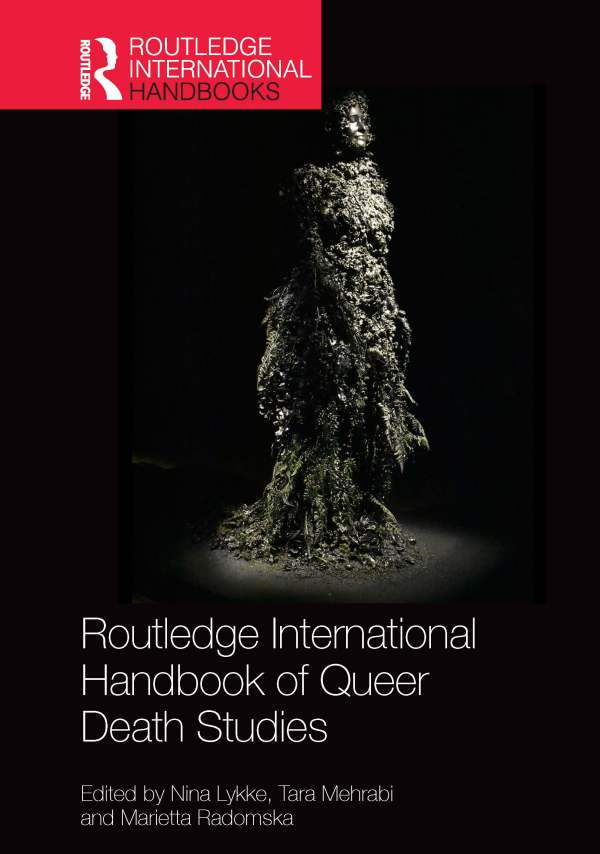
While I have held the title of docent (Swedish equivalent of continental-European habilitation) since June’24, it is only now that there is a chance for a moment of celebration.
Namely, if you are in Linköping on 25th February, please join us for the Docent and Professor’s Lectures organised by the Department of Thematic Studies (TEMA), where I will have a pleasure to present along with Prof. Thomas Kaiserfeld.
In my docent lecture ‘Biophilosophical Investigations: Between Environmental Humanities, Queer Death Studies, and Artistic Research’, I will take you on a little tour de force through my post-PhD research.
Hope to see you there.
New publication: “Mourning the More-Than-Human: Somatechnics of Environmental Violence, Ethical Imaginaries, and Arts of Eco-Grief”
Exciting news! The long awaited part 2 of the special issue of the journal Somatechnics, focused on the ‘Somatechnics of Violence: (Im)material, Affective, and Digital Transformations’ is finally out!
I feel privileged to have had a chance to contribute with an article (available in Open Access) to this wonderful, brilliant, and particularly timely volume!
Big congratulations of course go to the special issue editors: Evelien Geerts, Chantelle Gray and Delphi Carstens, and to all the wonderful contributors!
HERE you can check the entire issue.
And of course you are warmly invited to check out my contribution “Mourning the More-Than-Human: Somatechnics of Environmental Violence, Ethical Imaginaries, and Arts of Eco-Grief”, available in OA.
The article also discusses and features visual artworks by artists and creators: Polina Choni (UA), and Eglė Plytnikaitė, Agnė Stirnė and Oskaras Stirna (LT).
More about the article:
Theoretically grounded in queer death studies and environmental humanities, this article has a twofold aim. Firstly, it explores the somatechnics of environmental violence in the context of Northern and Eastern Europe, while paying attention to ongoing ecocide inflicted by Russia on Ukraine, and to the post-WW2 chemical weapon dumps in the Baltic Sea. Secondly, the article examines the concept of eco-grief in its close relation to artistic narratives on ecocide. By bridging the discussion on environmental violence and artistic renderings of eco-grief, the article hopes to contribute to a better understanding of the socio-cultural responses to more-than-human death and loss, and their accompanying ethical imaginaries and affordances.
Keywords: contemporary art; ecocide; eco-grief; environmental humanities; environmental violence; queer death studies.
Upcoming talk: “Queer/ing Imaginaries and Arts of Eco-Grief”, included in the series of Late Night Lectures
On 24th November I will be giving a talk: “Queer/ing Imaginaries and Arts of Eco-Grief”, included in the series of Late Night Lectures at the Baltic Circle International Theatre Festival in Helsinki. If you are around, tag along!
Igor Zabel Award 2022 and International Conference
Check out this brief brief recap of the Igor Zabel Award 2022 and the accompanying International Conference “So Close: Ecologies of Life and Death”, which took place in November 2022 and where I had an honour to give a talk.
For those of you who speak Slovenian, there is also a brief feature from the Slovenian national tv, RTV: https://www.rtvslo.si/rtv365/arhiv/174914940?s=tv
Ecologies of Death, Ecologies of Mourning: Volume I. International Symposium, 23 March 2023, Norrköping

Ecologies of Death, Ecologies of Mourning: Volume I
International Symposium
23RD MARCH 2023, 13:00 – 18:00
Organised by The Eco- and Bioart Lab, in collaboration with Queer Death Studies Network
VENUE: ARBETETS MUSEUM (THE MUSEUM OF WORK), NORRKÖPING
KEYNOTE SPEAKERS:
Prof. Patricia MacCormack (Anglia Ruskin University, UK)
Prof. Em. Nina Lykke (Linköping University, SE/Aarhus University, DK)
SPEAKERS:
Dr Evelien Geerts (University of Birmingham, UK)
Prof. Christina Fredengren (Uppsala University, SE)
Dr Tara Mehrabi & Dr Wibke Straube (Karlstad University, SE)
Dr Marietta Radomska (Linköping University, SE)
In the Anthropocene, the epoch of climate change and environmental destruction that render certain habitats unliveable and induce socio-economic inequalities and shared ‘more-than-human’ vulnerabilities, death and loss become urgent environmental concerns. As climate scientists indicate, in order to achieve UN Sustainable Development Goals (UN SDGs), a much more radical transformative action is needed from all stakeholders: governments, the private sector, communities and individuals (Höhne et al. 2020).
Simultaneously, planetary environmental disruption, contributing to the mortality of humans and nonhumans, destruction of entire ecosystems, the sixth mass extinction, both abrupt and ‘slow’ violence (Nixon 2011), evoke feelings of anxiety, anger and grief, manifested in popular-scientific and cultural narratives, art, and activism. These feelings are not always openly acknowledged or accepted in society; and the ecological, more-than-human dimensions of death have traditionally been underplayed in public debates. Yet, what we need now – more than ever – is the systematic problematisation of the planetary-scale mechanisms of annihilation of the more-than-human world in their philosophical, socio-cultural, ethico-political and very material dimensions. Only then will it be possible to talk about the issues of responsibility, accountability and care for more-than-human worlds (Radomska & Lykke 2022).
Taking its starting point in critically investigating and challenging conventional normativities, assumptions and expectations surrounding issues of death, dying and mourning in the contemporary world (Radomska, Meharbi & Lykke 2020; https://queerdeathstudies.net/), this interdisciplinary symposium zooms in on more-than-human ecologies of death, dying, grief and mourning across spatial and temporal scales.
The event is combined with the official launch of the four-year research project Ecological Grief, Crisis Imaginaries and Resilience in Nordic Lights (2022-26), led by Dr Marietta Radomska and generously funded by FORMAS: a Swedish Research Council for Sustainable Development.
Detailed Programme: TBA
REGISTRATION:
The participation in the symposium is free of charge, but we have a limited number of seats. If you wish to take part in the event, please, fill out the form: https://forms.office.com/e/Yb4qXpyVtX
Registration deadline: 15th March 2023 or until the event is fully booked.
NB! In case you register and it turns out you can no longer participate, please let us know by sending an email to: ecobioartlab[at]liu.se . In this way we may be able to let in anyone who may be on the waiting list.
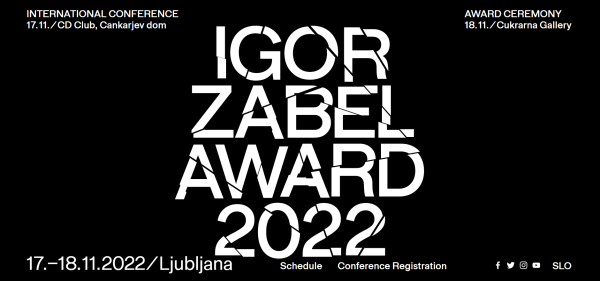
Igor Zabel Association: International Conference “So Close: Ecologies of Life and Death”
This month I have an honour and pleasure to speak at the International Conference “So Close: Ecologies of Life and Death”, organised by Igor Zabel Association for Culture and Theory. The event takes place on 17th November in Ljubljana (and is livestreamed on YouTube – see details below). Here comes some brief info:
International Conference “So Close: Ecologies of Life and Death”
The theme of the conference is the future of life on our planet from the perspective of life’s end, drawing attention to reconsiderations of loss, decline, mourning, and death. In this way, it seeks to transcend the binary of, on the one hand, dystopian pessimism about the future and, on the other, utopian optimism in the all-powerful human capacity to overcome the end.
Speakers: Maja and Reuben Fowkes, Thom van Dooren, Šejla Kamerić, Marietta Radomska, Boštjan Videmšek, and Mick Wilson
To take part in the conference online, don’t miss the YouTube stream (https://bit.ly/3zCOBhq): click the “notify me” button to get a reminder. You can also follow along via e-flux Live (https://bit.ly/3suq9dQ).
Read more about the event: https://www.igorzabel.org/en/news/2022/international-conference-2022
The event schedule and registration instruction are available on the event website: https://award.igorzabel.org/
The conference is supported by ERSTE Foundation.
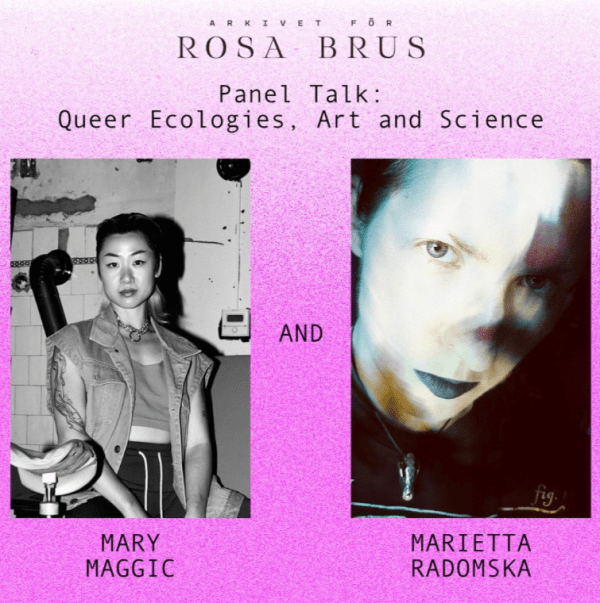
Queer Ecologies, Art and Science: Panel talk by Mary Maggic and Marietta Radomska
During the past several months I have given a number of talks in many diverse places and on different occasions. I haven’t been very good at documenting them, though.
Yet, this week I’ve had a great pleasure to take part in an event organised by The Archive of Pink Noises/Arkivet för Rosa Brus: a panel talk/conversation between artist Mary Maggic and myself, focused on the topic of Queer Ecologies, Art and Science.
The panel talk was livestreamed on Facebook on 8th December at 19h00-21h00 CET. In case you missed it, you can still watch the recording HERE.
And here comes the description of the event published by Rosa Brus:
As part of a series of panel talks, the queer sound archive The Archive of Pink Noises has invited scholar Marietta Radomska and artist Mary Maggic to discuss the emerging scholarly and artistic field of “queer ecologies” based in their own scientific and artistic practices.How can we imagine and critically understand the relations between life/death, living/non-living, human/non-human in a world of evironmental toxicities and hormone biopolitics from different queer ecological and/or ecophilosophical perspectives? What role can art play as a political tool in this endeavour? Conversely, what role can science and critical theory play in one’s art practices? What arenas of public discourse are the most important and urgent ones in which to intervene politically? And what methods and methodologies can one develop in one’s own science and art practices?The duration of the talk is approximately 60 minutes, with time for questions after the main talk.
MARY MAGGIC
Mary Maggic (b. Los Angeles, ’91) is a non-binary artist working at the intersection of cultural discourse, body and gender politics and ecological alienations. Using biohacking and public amateurism as a critical practice of care, Maggic investigates the micro-performativity of hormones and works collaboratively to demystify their molecular colonization.
https://maggic.ooo
MARIETTA RADOMSKA
Marietta Radomska, PhD, Assistant Professor in Environmental Humanities, Linköping University (Unit Gender Studies), Sweden; director of The Eco- and Bioart Lab; co-director of The Posthumanities Hub; and co-founder of Queer Death Studies Network. She works at the intersection of posthumanities, philosophy, queer death studies, and visual culture. www.mariettaradomska.com
THE ARCHIVE OF PINK NOISES
Arkivet för Rosa Brus (The Archive of Pink Noises) is a queer sound archive that aims to collect, archive and publish queer culture production in sonic form and we view (queer) sound as a bearer of history. We do this in collaboration with other archives, artists, activists and scholars. By collecting, archiving, reading and arranging public events in the shape of festivals, workshops and site-specific sound pieces around Sweden, we explore together with all the participants what pink noise and a queer sound archive can be. The work of AfRB is made in collaboration with the cultural association Tupilak (www.tupilak.org) and with grants from Kulturbryggan (Konstnärsnämnden/The Swedish Arts Grants Committee).
For more information or for submitting material to the archive please visit us at www.rosabrus.nu
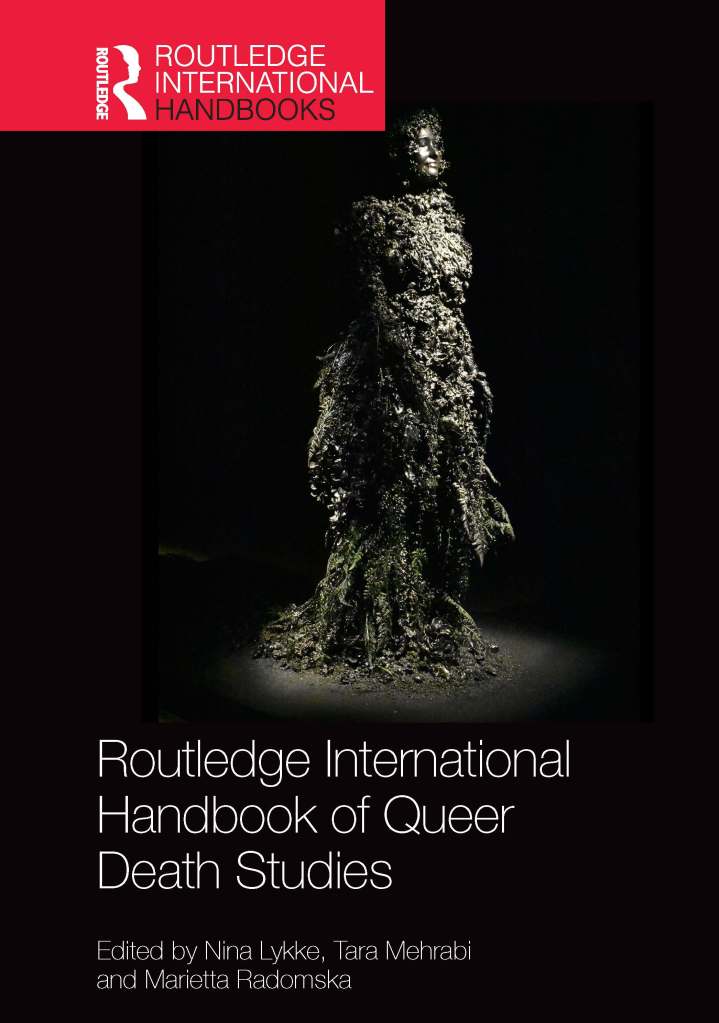
Call for abstracts: Queer Death Studies Reader. Edited by Nina Lykke, Marietta Radomska and Tara Mehrabi
The field of Queer Death Studies
The planned reader will gather a wide range of contributions to the field of Queer Death Studies (QDS). This is an emerging, transdisciplinary field of study which takes research on death, dying, and mourning in new directions, inspired by feminist, posthumanist, decolonial, anti-racist, queer, trans, body- and affect-theoretical scholarship, art and activism (Radomska, Mehrabi and Lykke 2020). What distinguishes QDS from conventional Death Studies such as death sociology or anthropology of death is an overall critical focus on the framing of death and extinction in the contemporary world through Anthropocene necropolitics (Mbembe 2003, Lykke 2019) and necropowers of post/colonialism, racial and extractivist capitalism. Death is approached as an ethico-political issue that is embedded in global power structures. QDS pays attention to systematic, necropolitical productions of death, in dialogue with ethico-political critiques emerging from political movements for social, environmental and planetary justice and change. QDS is also based on critiques of the dichotomous divides, characterising Western modernity, and is marked out through a critical focus on normativities and exclusionary notions of the human, casting the death of those who differ from the normative human subject in terms of gender, racialisation, migration status, class, geopolitical situatedness, able-bodiedness, and species as less grievable or disposable and not counting at all (Butler 2004). In short, QDS aligns itself with critiques of the intra-acting multiplicity of hierarchising divides between appropriate and in/appropriate/d others (Minh-ha 1989), articulated by social, environmental and planetary justice movements.
The Call
With this call, we invite abstracts from researchers, students, artists and activists who see their research and activities as aligned with critiques of the necropowers operating in the contemporary world, and who want to contribute to queering, decolonising and posthumanising death and the onto-epistemololgies and politics conventionally framing death.
QUEERING, DECOLONISING AND POSTHUMANISING
The verbform, queering, which we use here, encompasses a wide range of meanings. It refers to (1) open-ended deconstructing of normativities and processes of normalisation in various forms, as well as (2) undoing of heteropatriarchy, heteronormativity, binary gender and sexualities governed by reproductive biopowers or, in other words, the normative heterosexual matrix. Queering death is thus on the one hand understood as a critical strange-making, and defamiliarising, which may imply affirmative openings of other horizons than Christian and Cartesian dualist approaches to death, for example a focus on the vibrant entanglement of growing and decomposing (Radomska 2017; Lykke 2022). On the other hand, queering means critically focusing on the ways in which misogyny, trans- and queerphobia lead to social as well as physical death, and how violence and hate crimes towards non-normative individuals seek to render their lives and deaths non-grievable (Puar 2007; Chen 2012; Snorton 2017). Together with this broad spectrum of meanings, we also want to emphasise that queering should be understood in its intersections with decolonising and posthumanising efforts
Decolonising death involves critically dismantling the violent necropowers of colonisation, racial and extractivist capitalism, which for centuries have made death become ”life’s quiet companion” (Lehman 1997) for racialised and indigenous people worldwide, as well as confronting the over-arching racisms which continue to produce (physical, social and cultural) death along racialised lines. Moreover, decolonising death signals a turn towards pluritopic hermeneutics (Tlostanova and Mignolo 2009), i.e. hermeneutics which do not universalise Western modern frameworks, and which reevaluate indigenous philosophies, cosm-ontologies and sensibilities. In terms of life/death thresholds, this implies critically-affirmatively shifting the meanings of death, for example, substituting conceptualisations and imaginaries of death as a final endpoint within a chrononormative linear temporality, and instead opting for understandings, situated in geo- and corpo-political frameworks outside of Western modernity (e.g. Smith 1999; Anzaldua 2015).
Posthumanising death refers to the systematic problematisation of the planetary-scale mechanisms of annihilation of the more-than-human world in their ontological, epistemological and ethico-political dimensions. It involves critical analyses of the human/nonhuman divide and power differentials that have allowed for the reduction of the nonhuman to mere resource and instrument for human endeavours. Furthermore, the posthumanising move entails unpacking philosophical and cultural meanings of extinction and the ways in which it fundamentally disrupts life processes in relation to time, death and generations (e.g. Rose 2012); it draws attention to environmental violence, environmental grief, as well as nonhuman death manufactured en masse through anthropocentric habits of consumption and mechanisms of extractivism.
Consequently, posthumanising death takes seriously the issues of responsibility, accountability and care for/in dying more-than-human worlds, while remaining grounded in radical critiques of human exceptionalism, and affirmative embrace of alternatives (eg. Braidotti 2013; Haraway 2016; MacCormack 2020).
Formats and deadlines:
We call for abstracts of approximately 300 words, to be accompanied by a bio-note of approximately 200 words, as well as by a title of the proposed chapter and an indication of how the chapter relates to the below main themes to be covered in the reader.
Please, send your abstract etc to ninly[at]fastmail, cc: <marietta.radomska[at]liu.se> and <Tara.Mehrabi[at]kau.se>
Abstract DEADLINE: 1st NOVEMBER, 2021
We will respond to your abstract by MID-JANUARY 2022, and foresee submissions of FIRST DRAFT CHAPTERS by August 1, 2022.
We plan a reader with around 50 contributions, including a few reprints of classics. Scholarly as well as creative and artistic contributions are welcome! We hope together with contributors to build a reader which will be significant and agenda-setting for the field
THEMATIC CLUSTERS:
*Queering Death: Rethinking life/death ecologies
*Histories of necropowers and Anthropocene necropolitics
*Decolonising death
*Posthumanising death
*Demedicalising death
*Politics and Ethics of Mourning
*Alternative Spiritual, Aesthetic and Arts Activist Approaches to Death and After-life
The International Network for Queer Death Studies
The idea for the reader grew out of the international network for Queer Death Studies, which was founded in 2016, (see https://queerdeathstudies.net/). The network has organised several workshops and an international conference at Karlstad University, Sweden, in 2019.
We have earlier published two special journal issues of Australian Feminist Studies (2020, Vol 35 (104)), and Women, Gender and Research (2019: Issue 3-4).
REFERENCES
Anzaldua, G. E. (2015), Light in the Dark/Luz en Lo Oscuro: Rewriting Identity, Reality, Spirituality, Durham, NC: Duke University Press.
Braidotti, R. (2013), The Posthuman, Cambridge, UK: Polity Press.
Butler, J. (1990), Gender Trouble. Feminism and the Subversion of Identity, London, New York: Routledge.
Butler, J. (2004), Precarious Life: The Powers of Mourning and Violence, New York, NY: Verso.
Chen, M. Y. (2012), Animacies: Biopolitics, Racial Mattering and Queer Affect, Durham, NC: Duke University Press.
Haraway, Donna (2016), Staying with the Trouble: Making Kin in the Chthulucene, Durham, NC and London: Duke University Press.
Lehman, G. (1997), ‘Life’s Quiet Companion’, in G. Carey and R. Sorenson (eds), The Penguin Book of Death, 223–232, Ringwood: Penguin Australia.
Lykke, N. (2019), ‘Making Live and Letting Die: Cancerous Bodies between Anthropocene Necropolitics and Chthulucene Kinship’, Environmental Humanities, 11 (1): 108–36.
Lykke, N (2022), Vibrant Death. A Posthuman Phenomenology of Mourning. London: Bloomsbury Academic.
MacCormack, Patricia (2020a), The Ahuman Manifesto. Activism for the End of the Anthropocene. London: Bloomsbury Academic.
Mbembe, A. (2003), Necropolitics, Public Culture, 15 (1): 11–40.
Minh-ha, T. T. (1989), Woman, Native, Other: Writing Postcoloniality and Feminism, Bloomington and Indianapolis IN: Indiana University Press.
Puar, J. (2007), Terrorist Assemblages: Homonationalism in Queer Times, Durham: Duke UP-
Radomska, M., T. Mehrabi, and N. Lykke (2020), Queer Death Studies: Death, Dying and Mourning From a Queerfeminist Perspective, Australian Feminist Studies, 35(104): 81-100.
Radomska, M. (2017), Non/living Matter, Bioscientific Imaginaries and Feminist Technoecologies of Bioart, Australian Feminist Studies, 32 (94): 377-394.
Rose, D. B. (2012), Multispecies knots of ethical time, Environmental Philosophy, 9(1): 127–140.
Shildrick, M (2020) Queering the Social Imaginaries of the Dead, Australian Feminist Studies, 35(104): 170-185.
Smith, L.T. 1999. Decolonizing Methodologies. Research and Indigenous Peoples. London and New York: Zed books.
Snorton, C.R (2017), Black on Both Sides: A Racial History of Trans Identity. Minneapolis: University of Minnesota Press.
Tlostanova, M. and W. Mignolo (2009), On Pluritopic Hermeneutics, Trans-Modern Thinking, and Decolonial Philosophy, Encounters, 1 (1): 11–27.
You must be logged in to post a comment.