This wonderful and important event was supported by a Seed Box grant from Mistra-Formas Environmental Humanities Collaboratory, the Social Science and Humanities Research Council of Canada, Waste Flow (www.wasteflow.ca) and Queen’s University.
Here comes the (shortened) description from the symposium’s website:
The aim of this interactive virtual research-creation and art symposium is to bear modest witness to waste as a symptom of environmental racism. […] Environmental Racism is Garbage seeks knowledge production and acts of resistance at the intersection of art, politics, and the relationship between racialized injustice and ecological crisis. We’ve invited contributions and collaborations from visual and performance-based artists, curators, theorists and activists, to create submissions that engage with the interconnections between environmental health, socio-economic conditions, racialized discrimination, social justice – with transdisciplinary work driven by creative inquiry and lived experience forefronted.
Welcome to the Posthumanities Hub Seminar on ‘Arts of Non/Living Matters’ with Margherita Pevere and Dr Marietta Radomska!
The seminar is combined with the launch of the new research group and platform: The Eco- and Bioart Lab (EBL).
EBL, founded and head by Dr Marietta Radomska, connects artists, artistic researchers and other practitioners, as well as doctoral students whose practice and research focus on art and the environment in their broadest understanding.
When: 17th June 2021, 13:15 – 15:00 CEST
Where: On Zoom (more info below)
REGISTRATION:In order to take part in the seminar, please register by sending an email to the.posthumanities.hub@gmail.com by 16th June 2021 at noon (CEST) the latest.
The Zoom link will be sent to you on 16th June in the evening.
Speakers:
Leaking. Mattering.
By Margherita Pevere
Abstract
Drawing from her transdisciplinary practice, Margherita Pevere will recount how the non/living is an ongoing, uncontainable encounter made of leaks and unlearning.
She will do so by sharing the research behind her recent and previous artworks. She will talk about what it means to interrogate slugs and hormonal contraception as she did for the series ‘Wombs’. She will share very real and potential leaks encountered during the realisation of ‘Semina Aeternitatis’. She will delve into the body entanglements in ‘Eingeweide’, made in collaboration with artist Marco Donnarumma. She will recount how she worked with animal remains in ‘Lymph’.
While celebrating art, Margherita’s talk will weave a dialogue across non/living encounters with ecosystems as a fundamental epistemic mode. In fact, her artworks would exist without learning why the lagoon water gets transparent, observing algal blooms in urban waterways, or engaging with hybrid kinships of different kinds. Art and ecological observation are, in her practice, conjoined strategies of knowing differently.
Bio
A truly transdisciplinary practitioner, Margherita Pevere works across bioart and performance with a visceral signature. Her arresting creations hunt today’s surging ecological complexity and the ways embodiment and environment are always entangled. To do so, her research hybridises biolab practice, ecology, queer and death studies with a hacking attitude. She has exhibited her work internationally and is now completing a PhD in artistic research at Aalto University on bioart and queer theory. https://margheritapevere.com https://frontevacuo.com
Ecologies of the Non/Living: A Queerfeminist Biophilosophical Perspective
By Marietta Radomska
Abstract
The concept of ‘the non/living’ (Radomska 2016) stems from a transdisciplinary theoretical and practical engagement with bioart, bioscience, and philosophical approaches to life. The non/living reframes what is conventionally referred to as ‘life’ in order to problematise the materiality, processuality and ambiguity of the relationship between the living and non-living, growth and decay, and ultimately, life and death. This ambivalent entwinement comes to the fore even more so when considered against the backdrop of the planetary environmental disruption and other intersecting more-than-human crises of our times.
Drawing on process, queer and feminist philosophical perspectives as well as several select examples of contemporary bio-, eco- and media artworks, I will offer a queerfeminist biophilosophy as an approach that may allow us to better comprehend the complexity, vibrancy and materiality of the non/living. The latter, always-already understood as ‘ecologies of non/living matters’, calls for not only an ontological reflection, but also for an ethical one.
Bio
Marietta Radomska, PhD, is an Assistant Professor in Environmental Humanities at Linköping University (Unit Gender Studies); director of The Eco- and Bioart Lab; co-director of The Posthumanities Hub; and co-founder of Queer Death Studies Network. She works at the intersection of the posthumanities, environmental humanities, continental philosophy, feminist theory, queer death studies, visual culture and contemporary art; and has published in Australian Feminist Studies; Somatechnics; Women, Gender & Research and Artnodes, among others. Web: www.mariettaradomska.com
Image used on the poster: Margherita Pevere, Wombs | Study. pencil on colour print 27×18 cm, 2018.
Visual artist Emanuela Cusin (Wysing Arts Centre, Cambridge (UK)) and philosopher Dr Marietta Radomska (Assistant Professor in Environmental Humanities, Linköping University (SE)) present their artistic and philosophical engagements with the matter(s)—and materialisation—of (bio)art and ecologies of the non/living. They do so against the backdrop of these more-than-human crisis times that are afflicted by political and pandemic violence, (counter)terrorist acts and events, and processes of mourning, trauma, and commemoration.
Last week the Seed Box Environmental Humanities Collaboratory communication team invited me for a little chat about my research and various collaborations. Here’s the outcome (please, don’t mind the darkness – we’re living in Zoom/non-pro webcam times…):
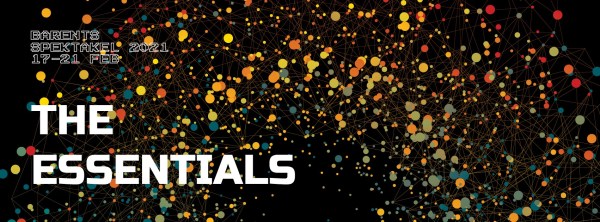
Check out the exciting online event: det gode liv/The Sweetness of Living forming part of the Barents Spektakel festival, taking place on 17-21 February in Kirkenes, Norway. The symposium itself is scheduled on 20th February (Saturday) from 10:00 to 14:00 CET. It takes place both on location and online. In order to register, fill out the form here.
Here’s a short description of the event, taken from the organisers’ website:
det gode liv // The Sweetness of Living is a networking, knowledge exchange, and experience-sharing artistic research and contemporary art project that begins in February 2021 and extends into the long-term future.
The research takes its inspiration from the publication Global Warming and the Sweetness of Life: A Tar Sands Tale (2018) by Matt Hern and Am Johal, where the authors investigate philosopher Giorgio Agamben’s invocation of Alexandre Kojeve’s phrase ‘la dolce vita’.
These ideas describe a common attitude in Spain, Italy, and southern Europe that is claimed to be qualitatively different from the Protestant work ethic of northern European countries. Agamben’s claim is that this attitude describes a wholly different relationship to the future, a recovery of time, a resistance to capitalism, and the preservation of a significant way of living: in short, the capacity to define life as something outside of work.
det gode liv // The Sweetness of Living builds on these gestures, investigating and challenging what ‘the sweetness of life’ represents specifically in the Barents region / the nordic countries and north-west Russia / Sápmi. The project is grounded in the belief that the topic has become an urgent cultural question following the events of 2020, when the present societal changes taking place during the Covid-19 pandemic have urged a radical re-configuration of the priorities of life and living.
The project begins by opening up the topic through three artworks and through several discursive, performative, and processual responses under The Sweetness of Living Symposium.
Among the speakers you can also find myself and Cecilia Åsberg with our talk on “More than survival: weaving vulnerabilities, questioning certainties, mobilising resilience. On low-trophic theories-practices for a more-than-human world”, starting at 12:00 sharp! Hope to see you there!
The latest issue of Artnodes: E-journal for Art, Science and Technology, focused on ‘Art in the Time of Pandemic’ and edited by Laura Benitez and Erich Berger is finally out and available in OPEN ACCESS. Inside you may also find a contribution by myself, Mayra Citllali Rojo Gómez, Margherita Pevere and Terike Haapoja, entitled: ‘Non/Living Queerings, Undoing Certainties, Braiding Vulnerabilities: A Collective Reflection’. You can read our article here.
Abstract:
The ongoing global pandemic of Covid-19 has exposed SARS-CoV-2 as a potent non-human actant that resists the joint scientific, public health and socio-political efforts to contain and understand both the virus and the illness. Yet, such a narrative appears to conceal more than it reveals. The seeming agentiality of the novel coronavirus is itself but one manifestation of the continuous destruction of biodiversity, climate change, socio-economic inequalities, neocolonialism, overconsumption and the anthropogenic degradation of nature. Furthermore, focusing on the virus – an entity that holds an ambiguous status between the ‘living’ and ‘non-living’ – brings into question the issue of the agentiality of non/living matter. While the story of viral potency seems to get centre stage, overshadowing the complex and perverse entanglement of processes and phenomena which activated these potentials in the first place, the Covid-19 pandemic also becomes a prism that sheds light on the issues of environmental violence; social and environmental injustices; more-than-human agentiality; and ethico-political responses that the present situation may mobilise.
This article serves as a written record of joint conversations between artists and researchers in the working group ‘Non/Living Queerings’ that formed part of the online series of events ‘Braiding Friction’ organised by the research project Biofriction. The article strives to capture the collective effort of braiding and weaving a variety of situated perspectives, theoretical toolboxes, knowledges and experiences against the background of the ongoing Covid-19 pandemic. In particular, the text focuses on the issues of crisis, ‘amplification effect’, viral agency and the changing notions of humanity.
Keywords
the non/living, queering, Covid-19 pandemic, art, vulnerability, amplification
Environmental violence takes form of both ‘spectacular’ events, like ecological disasters usually recognised by the general public, and ‘slow violence’, a type of violence that occurs gradually, out of sight and on a long-term scale. Planetary seas and oceans, loaded with cultural meanings of that which ‘hides’ and ‘allows to forget’, are the spaces where such attritional violence unfolds unseen and ‘out of mind’. Simultaneously, conventional concepts of nature and culture, as dichotomous entities, become obsolete. We all inhabit and embody the world differently, as variously situated people, divided by national, sexual, bodily and economic status, and as very variously situated nonhumans in an increasingly anthropogenic world. This chapter focuses on subtle ‘slow violence’ unfolding through the instances of submerged chemical weapons, so-called dead zones, invasive species and high- and low-trophic mariculture in the Baltic and North Sea regions. It zooms in on the select cases of such ‘environed bodies’, their stories of excruciating slow violence and yet also on unexpected encounters with care and hospitality. The aim is to unfold a low–trophic theory for the naturecultural research on violence and care within environmental humanities, and to engage a coexistential ethics of environmental adaptability informed by feminist posthumanities.
Keywords:
Environmental violence; Seas and oceans; Low-trophic theory; Feminist posthumanities
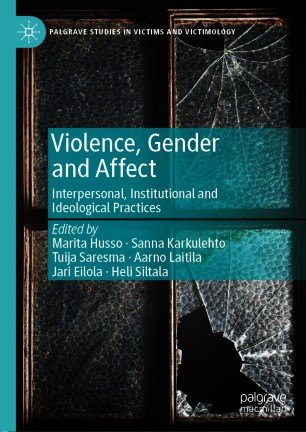
Åsberg C., Radomska M. (2021) Environmental Violence and Postnatural Oceans: Low-Trophic Theory in the Registers of Feminist Posthumanities. In: Husso M., Karkulehto S., Saresma T., Laitila A., Eilola J., Siltala H. (eds) Violence, Gender and Affect. Palgrave Studies in Victims and Victimology. Palgrave Macmillan, Cham. https://doi.org/10.1007/978-3-030-56930-3_13
Frame Contemporary Art Finland’s public programme Rehearsing Hospitalities (2019-2023) connects artists, curators and other practitioners in the field of contemporary art and beyond in order to build up and mediate new practices, understandings and engagements with diverse hospitalities. In September 2020 RH held a series of events under the same title and published a new volume Rehearsing Hospitalities Companion 2. The book is edited by Yvonne Billimore and Jussi Koitela, and is available in OPEN ACCESS via Archive Books.
Inside you may find a chapter written by me ‘Viral Queering, Amplified Vulnerabilities’ (pp. 155-172).
And here comes a little snippet about the project taken from RH website:
Rehearsing Hospitalities Companion 2 is the second in a series of readers published by Frame Contemporary Art Finland and Archive Books, which accompany Frame’s five-year public programme Rehearsing Hospitalities.
The Rehearsing Hospitalities Companion series makes visible the processes and influences that shape the content and relations within the wider Rehearsing Hospitalities programme. The first edition in the series centered how to become more hospitable to diverse ways of knowing. The second edition leads on from this by introducing questions of access and considering access from multiple approaches, perceptions and relations.
“Now more than ever we need to be consciously reconsidering diverse forms of hospitalities and ways of being together”, say the editors Yvonne Billimore and Jussi Koitela. “With this publication we wanted to look beyond normative and institutionalised understandings of access. How can arts organisations and institutions treat access not as general or universal policy, but instead understand access needs as coming from plural and decentralised ways of knowing and experiencing the world?”
The 2020 publication came together during times marked by a myriad of global crises (COVID-19, racialized violence, ecological emergency, being among the most prominent). It is in these disconnected times that the publication and its contributors have turned to hospitality. Rehearsing Hospitalities Companion 2 is a site hosting and gathering, for coming together to re-visit, re-turn and re-configure worlds of hospitaties.
With contributions coming from a range of practitioners all with differing backgrounds, writing styles and approaches, the publication welcomes engagement across disciplines. It aims to spark critical thinking, discussion and action on access and hospitality in the field of arts and culture, and beyond.
The issue contains contributions by QDS scholars: Patricia MacCormack, Marietta Radomska, Tara Mehrabi, Stine Willum Adrian, Margrit Shildrick, Hema’ny Molina Vargas, Camila Marambio and Nina Lykke.
The collection strives to advance queerfeminist methodologies and ontological, ethical and political understandings that critically and creatively attend to the problem of death, dying and mourning in the current environmental, cultural, and socio-political contexts.
In order to learn more, do check out the introduction “Queer Death Studies: Death, Dying and Mourning From a Queerfeminist Perspective”, co-authored by myself, Tara and Nina, available in OA here.
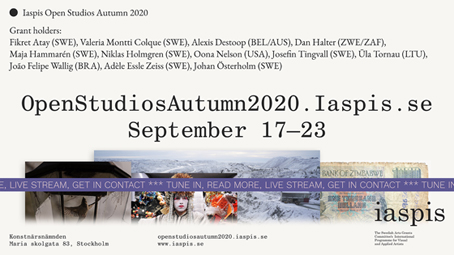
This autumn the Swedish Arts Grants Committee’s international programme for Visual and Applied Artists Iaspis Open Studios transforms into an online platform and seven-day programme with live-streamed happenings, art, talks and scheduled conversations. One of the elements of the rich programme is a conversation between brilliant Swedish artist Josefin Tingvall and myself. For more, see IASPIS Open Studios website.







You must be logged in to post a comment.