Docent lecture ‘Biophilosophical Investigations: Between Environmental Humanities, Queer Death Studies, and Artistic Research’
While I have held the title of docent (Swedish equivalent of continental-European habilitation) since June’24, it is only now that there is a chance for a moment of celebration.
Namely, if you are in Linköping on 25th February, please join us for the Docent and Professor’s Lectures organised by the Department of Thematic Studies (TEMA), where I will have a pleasure to present along with Prof. Thomas Kaiserfeld.
In my docent lecture ‘Biophilosophical Investigations: Between Environmental Humanities, Queer Death Studies, and Artistic Research’, I will take you on a little tour de force through my post-PhD research.
Hope to see you there.
New publication: “Mourning the More-Than-Human: Somatechnics of Environmental Violence, Ethical Imaginaries, and Arts of Eco-Grief”
Exciting news! The long awaited part 2 of the special issue of the journal Somatechnics, focused on the ‘Somatechnics of Violence: (Im)material, Affective, and Digital Transformations’ is finally out!
I feel privileged to have had a chance to contribute with an article (available in Open Access) to this wonderful, brilliant, and particularly timely volume!
Big congratulations of course go to the special issue editors: Evelien Geerts, Chantelle Gray and Delphi Carstens, and to all the wonderful contributors!
HERE you can check the entire issue.
And of course you are warmly invited to check out my contribution “Mourning the More-Than-Human: Somatechnics of Environmental Violence, Ethical Imaginaries, and Arts of Eco-Grief”, available in OA.
The article also discusses and features visual artworks by artists and creators: Polina Choni (UA), and Eglė Plytnikaitė, Agnė Stirnė and Oskaras Stirna (LT).
More about the article:
Theoretically grounded in queer death studies and environmental humanities, this article has a twofold aim. Firstly, it explores the somatechnics of environmental violence in the context of Northern and Eastern Europe, while paying attention to ongoing ecocide inflicted by Russia on Ukraine, and to the post-WW2 chemical weapon dumps in the Baltic Sea. Secondly, the article examines the concept of eco-grief in its close relation to artistic narratives on ecocide. By bridging the discussion on environmental violence and artistic renderings of eco-grief, the article hopes to contribute to a better understanding of the socio-cultural responses to more-than-human death and loss, and their accompanying ethical imaginaries and affordances.
Keywords: contemporary art; ecocide; eco-grief; environmental humanities; environmental violence; queer death studies.
Upcoming talk: “Queer/ing Imaginaries and Arts of Eco-Grief”, included in the series of Late Night Lectures
On 24th November I will be giving a talk: “Queer/ing Imaginaries and Arts of Eco-Grief”, included in the series of Late Night Lectures at the Baltic Circle International Theatre Festival in Helsinki. If you are around, tag along!
Igor Zabel Award 2022 and International Conference
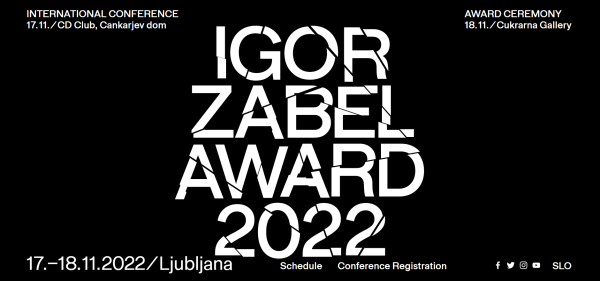
Check out this brief brief recap of the Igor Zabel Award 2022 and the accompanying International Conference “So Close: Ecologies of Life and Death”, which took place in November 2022 and where I had an honour to give a talk.
For those of you who speak Slovenian, there is also a brief feature from the Slovenian national tv, RTV: https://www.rtvslo.si/rtv365/arhiv/174914940?s=tv
Ecologies of Death, Ecologies of Mourning: Volume I. International Symposium, 23 March 2023, Norrköping

Ecologies of Death, Ecologies of Mourning: Volume I
International Symposium
23RD MARCH 2023, 13:00 – 18:00
Organised by The Eco- and Bioart Lab, in collaboration with Queer Death Studies Network
VENUE: ARBETETS MUSEUM (THE MUSEUM OF WORK), NORRKÖPING
KEYNOTE SPEAKERS:
Prof. Patricia MacCormack (Anglia Ruskin University, UK)
Prof. Em. Nina Lykke (Linköping University, SE/Aarhus University, DK)
SPEAKERS:
Dr Evelien Geerts (University of Birmingham, UK)
Prof. Christina Fredengren (Uppsala University, SE)
Dr Tara Mehrabi & Dr Wibke Straube (Karlstad University, SE)
Dr Marietta Radomska (Linköping University, SE)
In the Anthropocene, the epoch of climate change and environmental destruction that render certain habitats unliveable and induce socio-economic inequalities and shared ‘more-than-human’ vulnerabilities, death and loss become urgent environmental concerns. As climate scientists indicate, in order to achieve UN Sustainable Development Goals (UN SDGs), a much more radical transformative action is needed from all stakeholders: governments, the private sector, communities and individuals (Höhne et al. 2020).
Simultaneously, planetary environmental disruption, contributing to the mortality of humans and nonhumans, destruction of entire ecosystems, the sixth mass extinction, both abrupt and ‘slow’ violence (Nixon 2011), evoke feelings of anxiety, anger and grief, manifested in popular-scientific and cultural narratives, art, and activism. These feelings are not always openly acknowledged or accepted in society; and the ecological, more-than-human dimensions of death have traditionally been underplayed in public debates. Yet, what we need now – more than ever – is the systematic problematisation of the planetary-scale mechanisms of annihilation of the more-than-human world in their philosophical, socio-cultural, ethico-political and very material dimensions. Only then will it be possible to talk about the issues of responsibility, accountability and care for more-than-human worlds (Radomska & Lykke 2022).
Taking its starting point in critically investigating and challenging conventional normativities, assumptions and expectations surrounding issues of death, dying and mourning in the contemporary world (Radomska, Meharbi & Lykke 2020; https://queerdeathstudies.net/), this interdisciplinary symposium zooms in on more-than-human ecologies of death, dying, grief and mourning across spatial and temporal scales.
The event is combined with the official launch of the four-year research project Ecological Grief, Crisis Imaginaries and Resilience in Nordic Lights (2022-26), led by Dr Marietta Radomska and generously funded by FORMAS: a Swedish Research Council for Sustainable Development.
Detailed Programme: TBA
REGISTRATION:
The participation in the symposium is free of charge, but we have a limited number of seats. If you wish to take part in the event, please, fill out the form: https://forms.office.com/e/Yb4qXpyVtX
Registration deadline: 15th March 2023 or until the event is fully booked.
NB! In case you register and it turns out you can no longer participate, please let us know by sending an email to: ecobioartlab[at]liu.se . In this way we may be able to let in anyone who may be on the waiting list.
Igor Zabel Association: International Conference “So Close: Ecologies of Life and Death”
This month I have an honour and pleasure to speak at the International Conference “So Close: Ecologies of Life and Death”, organised by Igor Zabel Association for Culture and Theory. The event takes place on 17th November in Ljubljana (and is livestreamed on YouTube – see details below). Here comes some brief info:
International Conference “So Close: Ecologies of Life and Death”
The theme of the conference is the future of life on our planet from the perspective of life’s end, drawing attention to reconsiderations of loss, decline, mourning, and death. In this way, it seeks to transcend the binary of, on the one hand, dystopian pessimism about the future and, on the other, utopian optimism in the all-powerful human capacity to overcome the end.
Speakers: Maja and Reuben Fowkes, Thom van Dooren, Šejla Kamerić, Marietta Radomska, Boštjan Videmšek, and Mick Wilson
To take part in the conference online, don’t miss the YouTube stream (https://bit.ly/3zCOBhq): click the “notify me” button to get a reminder. You can also follow along via e-flux Live (https://bit.ly/3suq9dQ).
Read more about the event: https://www.igorzabel.org/en/news/2022/international-conference-2022
The event schedule and registration instruction are available on the event website: https://award.igorzabel.org/
The conference is supported by ERSTE Foundation.
You must be logged in to post a comment.