Call for short contributions (500-2000 words): What do we talk about when we talk about queer death? (Whatever Journal)

Check out this exciting CfP! DEADLINE: 15 January 2021!

Machinic Assemblage's avatarQueer Death Studies Network

Whatever. A Transdisciplinary Journal of Queer Theories and Studies (https://whatever.cirque.unipi.it/) is inviting submissions for short contributions (500-2000 words) to be collected in a multi-authored article entitled “What do we talk about when we talk about queer death?”. The article will introduce the themed section Queer thanatologies (edited by A.C. Corradino, C. Dell’Aversano, R. Langhi and M. Petricola) that will appear in Whatever’s next issue in summer 2021.

Queer death studies has recently emerged as a transdisciplinary field of inquiry investigating the cultural performances related to death, dying, grief, and disposal from the perspective of queer theory, defined as a hermeneutical stance whose premises could be summed up as follows: «queer states that any construction of identity (including LGBT ones) is a performance constituting a subject which does not “exist” prior to it, and encourages to bring into being (both as objects of desire, of fantasy…

View original post 359 more words

New Publication: contribution to ‘Rehearsing Hospitalities Companion 2’

Frame Contemporary Art Finland’s public programme Rehearsing Hospitalities (2019-2023) connects artists, curators and other practitioners in the field of contemporary art and beyond in order to build up and mediate new practices, understandings and engagements with diverse hospitalities. In September 2020 RH held a series of events under the same title and published a new volume Rehearsing Hospitalities Companion 2. The book is edited by Yvonne Billimore and Jussi Koitela, and is available in OPEN ACCESS via Archive Books.

Inside you may find a chapter written by me ‘Viral Queering, Amplified Vulnerabilities’ (pp. 155-172).

You can check it out here.

And watch the online series of events on the Frame YouTube Channel.

And here comes a little snippet about the project taken from RH website:

Rehearsing Hospitalities Companion 2 is the second in a series of readers published by Frame Contemporary Art Finland and Archive Books, which accompany Frame’s five-year public programme Rehearsing Hospitalities.

The Rehearsing Hospitalities Companion series makes visible the processes and influences that shape the content and relations within the wider Rehearsing Hospitalities programme. The first edition in the series centered how to become more hospitable to diverse ways of knowing. The second edition leads on from this by introducing questions of access and considering access from multiple approaches, perceptions and relations.

“Now more than ever we need to be consciously reconsidering diverse forms of hospitalities and ways of being together”, say the editors Yvonne Billimore and Jussi Koitela. “With this publication we wanted to look beyond normative and institutionalised understandings of access. How can arts organisations and institutions treat access not as general or universal policy, but instead understand access needs as coming from plural and decentralised ways of knowing and experiencing the world?”

The 2020 publication came together during times marked by a myriad of global crises (COVID-19, racialized violence, ecological emergency, being among the most prominent). It is in these disconnected times that the publication and its contributors have turned to hospitality. Rehearsing Hospitalities Companion 2 is a site hosting and gathering, for coming together to re-visit, re-turn and re-configure worlds of hospitaties.

With contributions coming from a range of practitioners all with differing backgrounds, writing styles and approaches, the publication welcomes engagement across disciplines. It aims to spark critical thinking, discussion and action on access and hospitality in the field of arts and culture, and beyond.

New Publication: Special issue of the journal Australian Feminist Studies focused on Queer Death Studies

I am delighted to say that the special issue of the journal Australian Feminist Studies focused on the topic of “Queer Death Studies” and co-edited by myself, Tara Mehrabi and Nina Lykke, has finally been published.

The issue contains contributions by QDS scholars: Patricia MacCormack, Marietta Radomska, Tara Mehrabi, Stine Willum Adrian, Margrit Shildrick, Hema’ny Molina Vargas, Camila Marambio and Nina Lykke.

The collection strives to advance queerfeminist methodologies and ontological, ethical and political understandings that critically and creatively attend to the problem of death, dying and mourning in the current environmental, cultural, and socio-political contexts.

In order to learn more, do check out the introduction “Queer Death Studies: Death, Dying and Mourning From a Queerfeminist Perspective”, co-authored by myself, Tara and Nina, available in OA here.

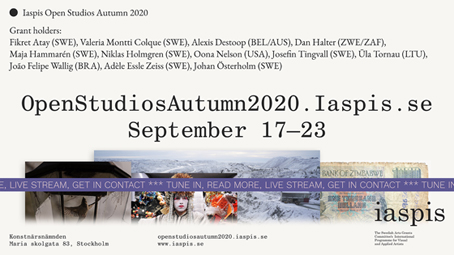
This autumn the Swedish Arts Grants Committee’s international programme for Visual and Applied Artists Iaspis Open Studios transforms into an online platform and seven-day programme with live-streamed happenings, art, talks and scheduled conversations. One of the elements of the rich programme is a conversation between brilliant Swedish artist Josefin Tingvall and myself. For more, see IASPIS Open Studios website.

EDIT: If you missed our conversation on 17th September, you can still check it out here: https://openstudiosautumn2020.iaspis.se/programme/#tingvallconversation

New Publication: Methodologies of Kelp

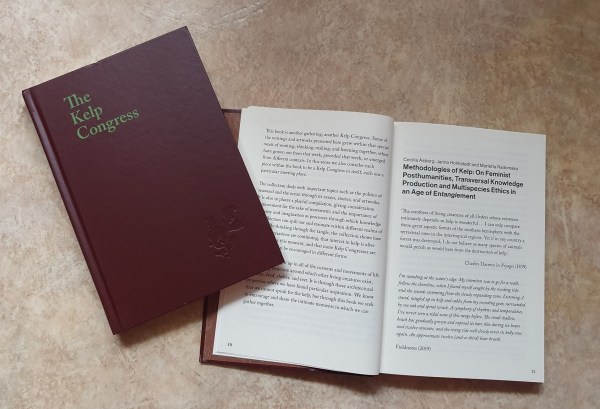
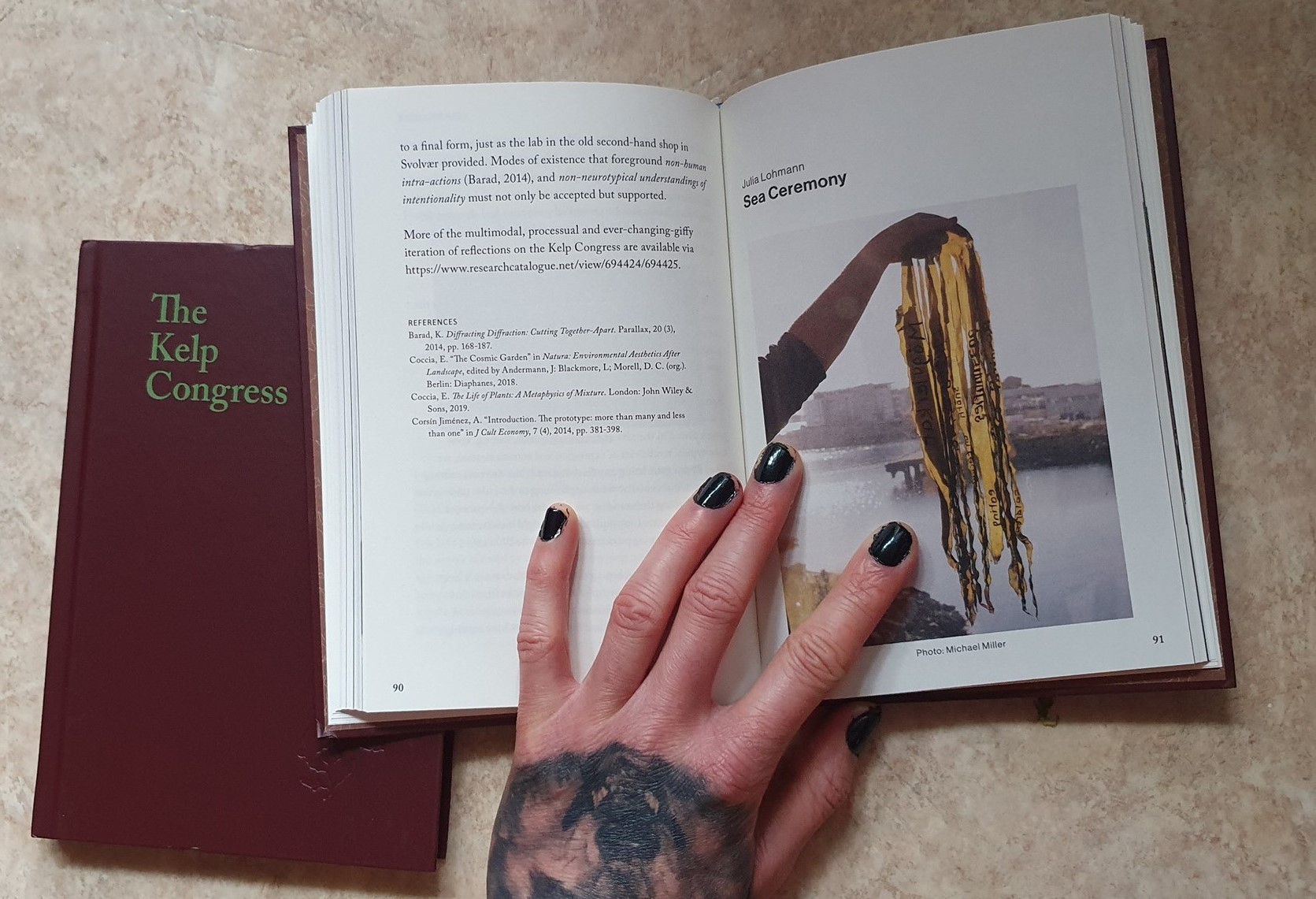
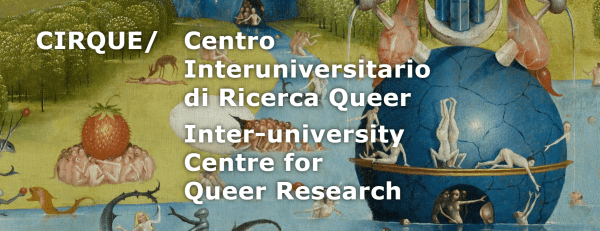
Last month the book The Kelp Congress (in English) / Tangboka (in Norwegian), edited by Hilde Mehti, Neal Cahoon and Annette Wolfsberger, was published by NNKS Press (Nordnorsk kunstnersenter). The volume contains contributions by the participants of the Kelp Congress, an event forming part of Lofoten International Art Festival, which took place in September 2019. Among many brilliant chapters by artists and researchers you may also find an essay by Cecilia Åsberg, Janna Holmstedt and myself, entitled ‘Methodologies of Kelp: On Feminist Posthumanities, Transversal Knowledge Production and Multispecies Ethics in an Age of Entanglement’.

For more info on how to order the book, see The Kelp Congress website.

More on the book itself:

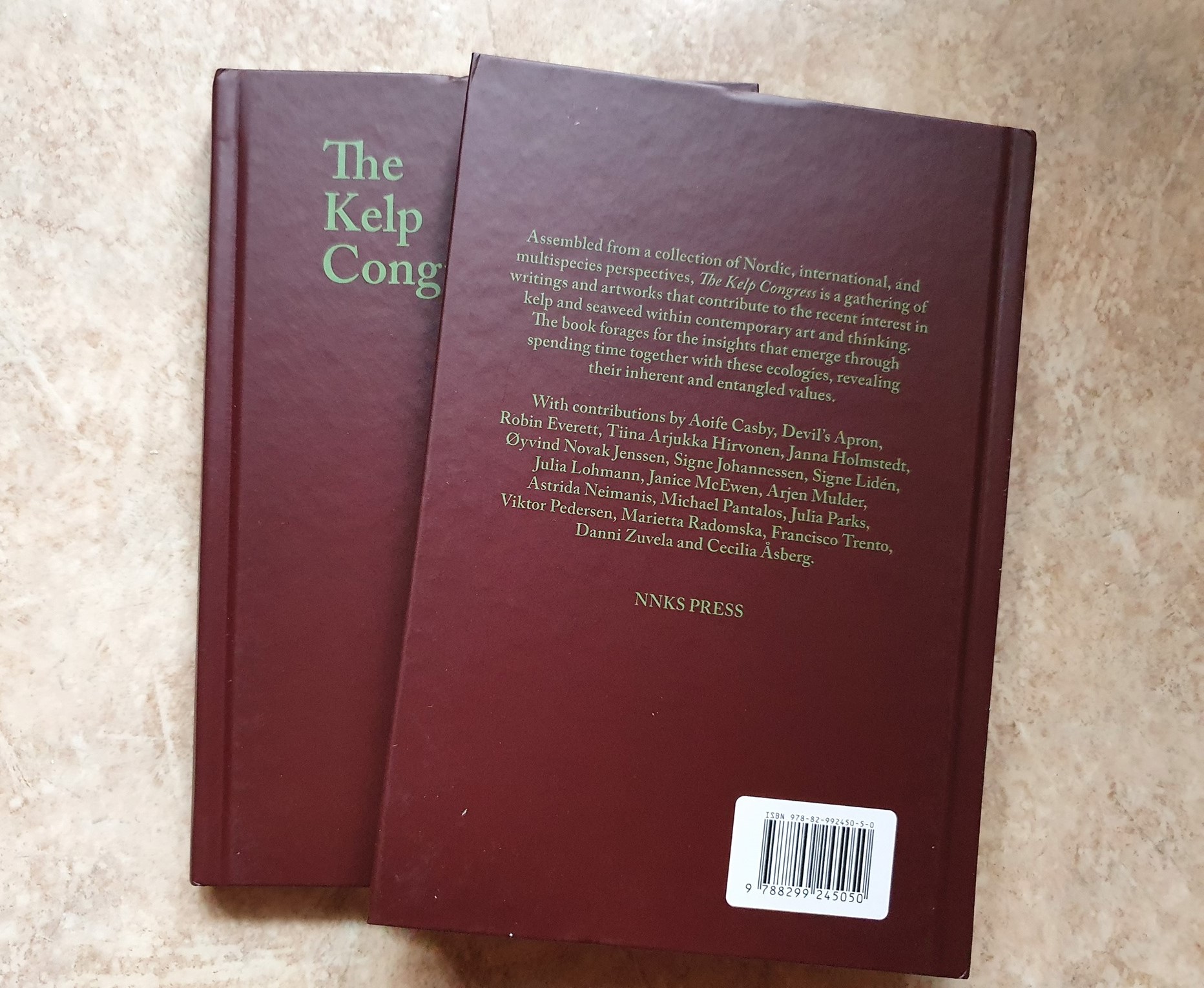
Assembled from a collection of Nordic, international, and multispecies perspectives, The Kelp Congress is a gathering of writings and artworks that contribute to the recent interest in kelp and seaweed within contemporary art and thinking. The book forages for the insights that emerge through spending time together with these ecologies, revealing their inherent and entangled values.

Contributors: Aoife Casby, Devil’s Apron, Robin Everett, Tiina Arjukka Hirvonen, Janna Holmstedt, Øyvind Novak Jenssen, Signe Johannessen, Signe Lidén, Julia Lohmann, Janice McEwen, Arjen Mulder, Astrida Neimanis, Michael Pantalos, Julia Parks, Viktor Pedersen, Marietta Radomska, Francisco Trento, Danni Zuvela and Cecilia Åsberg.

And a little bit more on our contribution:

C. Åsberg, J. Holmstedt and M. Radomska, 2020. Methodologies of Kelp: On Feminist Posthumanities, Transversal Knowledge Production and Multispecies Ethics in an Age of Entanglement. In: The Kelp Congress, edited by H. Mehti, N. Cahoon, and A. Wolfsberger, Svolvær: NNKS Press, pp. 11-23.

Abstract:

This chapter takes departure in the experience gathered through our participation in two workshops: Kelp Curing and Coast, Line, forming part of the Kelp Congress, as well as our daily research and art practices. We take kelp as material entities immersed in a multitude of relations with other creatures (for whom kelp serves as both nourishment and shelter) and inorganic elements of the milieu it resides in, on the one hand, and as a figuration: a material-semiotic “map of contestable worlds” that encompasses entangled threads of “knowledge, practice and power” (Haraway 1997, 11) in its local and global sense, on the other. While drawing on our field notes from the congress and feminist posthumanities and environmental humanities literatures (e.g. Alaimo 2016; Åsberg & Braidotti 2018; Sandilands & Erickson 2010; Iovino & Opperman 2014) – with a special focus on the so-called blue humanities/oceanic humanities (e.g. DeLoughrey 2019) – that unpack human/nonhuman relations in the context of the current environmental crisis and the accompanying “slow violence” (Nixon 2011), we mobilise a reflection on and make a proposal for “thinking with kelp” as a multi-faceted methodology of transversal and transdisciplinary knowledge production and practices: situated (Haraway 1988), enfleshed, transcorporeal (Alaimo 2010), collaborative, and committed to an ethics of multispecies response-ability (Haraway 2008).

You may read it HERE.
New publication: Deterritorilising Death

It is my great pleasure to say that my latest article Deterritorialising Death: Queerfeminist Biophilosophy and Ecologies of the Non/Living in Contemporary Art, forming part of the special issue of Australian Feminist Studies focused on “Queer Death Studies: Death, Dying and Mourning From a Queerfeminist Perspective”, co-edited by myself, Tara Mehrabi and Nina Lykke, has just been published online. The text is available in OPEN ACCESS.

Abstract:

In the contemporary context of environmental crises and the degradation of resources, certain habitats become unliveable, leading to the death of individuals and species extinction. Whilst bioscience emphasises interdependency and relationality as crucial characteristics of life shared by all organisms, Western cultural imaginaries tend to draw a thick dividing line between humans and nonhumans, particularly evident in the context of death. On the one hand, death appears as a process common to all forms of life; on the other, as an event that distinguishes human from other organisms. Against this background, this article explores how contemporary art—in particular, the series of works The Absence of Alice (2008–2011) by Australian new-media and bioartist Svenja Kratz—challenges the normative and human-exceptionalist concept of death. By employing queerfeminist biophilosophy as a strategy that focuses on relations, processes and transformations instead of ‘essences’, the article examines the ways Kratz’s works deterritorialise the conventional concept of death. In this way, it hopes to attend to the intimacies between materialities of a human and nonhuman kind that form part of the processes of death and dying, and what follows, to reframe ethico-ontology of death as material and processual ecologies of the non/living.

KEYWORDS: queerfeminist biophilosophydeaththe non/livingQueer Death StudiesartSvenja Kratz

InterGender course “Queer Death Studies – Analyzing and Resisting Necropower”

QUEER DEATH STUDIES: Check out this PhD/advanced MA course to be held online in December!

Machinic Assemblage's avatarQueer Death Studies Network

LOGO
NEWS via InterGender, Consortium and Research School in Interdisciplinary Gender Studies
 
For this course PhD students, but also Master’s students are eligible to apply.
 
Title of the Course:
Queer Death Studies – Analyzing and Resisting Necropower
 
The recommended accreditation is: 7,5 + 7,5 credits
 
Time:
December 8, 2020
 
Location:
Online
 
Deadline for applications:
September 20, 2020
 
Applications should be sent to:
InterGender Consortium Coordinator Edyta Just (edyta.just[at]liu.se)
 
Maximum number of participants:
20 participants
 
Organized by:
InterGender, Consortium and Research School in Interdisciplinary Gender Studies
and Linköping University, Sweden
 
Course coordinator:
InterGender Consortium Coordinator Edyta Just (edyta.just[at]liu.se)
 
Teachers:
Professor Em Nina Lykke, Linköping University, Sweden
Senior lecturer Tara Mehrabi, Karlstad University, Sweden
Postdoc Marietta Radomska, Linköping University, Sweden
 
* Course description:
The course gives an introduction to the emerging field of Queer Death Studies, its critiques of necropowers…

View original post 1,434 more words

Website Built with WordPress.com.

Up ↑